EAI는 아시아 지역의 민주적 거버넌스와 인권 증진에 관련된 연구를 진행하기 위해 2013년 11월 아시아민주주의연구네트워크(Asia Democracy Research Network: ADRN)를 발족했다. EAI는 국내 싱크탱크의 대표기관인 동시에 아시아 지역 싱크탱크의 직능대표로서 소속된 연구기관들의 민주주의 관련 연구지원 및 관리를 담당하고 있다.

ADRN은 아시아 지역이 직면한 민주주의 위협 요인을 분석하고 민주주의 전환 및 공고화에 기여할 수 있는 실무형 연구과제를 논의하고 확산하고자 창립되었다. ADRN은 연구에 기반한 정책 제시를 목표로 아시아 민주주의의 위협 요소와 당면과제를 점검하고 지역적 차원에서 바라보는 민주주의 발전을 위한 실천적 의제를 발굴하고 연구하고 있다. 네트워크에는 한국의 EAI를 비롯하여 대만, 말레이시아, 몽골, 미얀마, 방글라데시, 스리랑카, 인도, 인도네시아, 일본, 태국, 파키스탄, 필리핀 등 아시아 14개국 22개의 주요 싱크탱크들이 참여하고 있다. 

논평이슈브리핑
[ADRN Issue Briefing] Beyond the US-China Rivalry: Developing a Shared Democratic Vision for the Indo-Pacific

.a_wrap {font-size:16px; font-family:Nanum Gothic, Sans-serif, Arial; line-height:26px;} 편집자 주 The United States' leadership for the democratic world was seriously damaged following the violence in the Capitol earlier this month. Now, with a genuine understanding of the existing threat to democracy, the newly inaugurated Biden administration can approach Asian democracies on equal terms to reverse the democratic setbacks that have become visible since the mid-2000s. Although the establishment of democratic coalitions between the US and other democracies is an increasingly debated topic, Sook Jong Lee, Professor of Public Administration at Sungkyunkwan University and Senior Fellow of the East Asia Institute, argues that these coalitions should be welcomed in Asia to sustain the regional liberal order. However, she suggests that the US take a more cautious and nuanced approach when engaging with Asian democracies so that it is not viewed as another rebalancing against China. Professor Lee states that Asian democracies have both the capacity and limitations in participating in the global and regional spaces of governance. For human rights issues and other core democratic values and norms, global institutions such as the United Nations are more appropriate platforms for Asian democracies in forming democratic coalitions. At the regional level, Asian countries desire for US leadership in guaranteeing their protection from China’s economic coercion and in safeguarding fair and transparent rules for all. Asian democracies also have the ability to contribute to global governance by acting as aid donors to many developing countries in the world. The democratic assistance that these countries provide have the potential to generate meaningful impact, especially as it is shifting from conventional infrastructural aids to encompass the Sustainable Development Goal 16 (SDG-16). Combining these strategies, Asian democracies and the US can establish more durable democratic coalitions.     The lawlessness and violence at the US Capitol on January 6 were no less troubling to the people of democracies around the world than to American citizens. Policy leaders are concerned about the chilling effect of this event on the new Biden Administration’s attempts to restore its leadership of global democracy. Indeed, Hass said the self-made destruction contributes to the decline of US influence and would accelerate the onset of a post-American world.[1] Policy experts are arguing that repairing democracy at home is not incompatible with standing up for democracy abroad and that America needs a democracy summit now more than ever.[2] During the campaign period, Joe Biden expressed his genuine concerns about the global democratic setbacks and called for a summit of democracies.[3] This article supports the democratic coalitions between Asian democracies and the US. American leaders now have moments of their own democracy on which to truly reflect and a chance to engage Asian democracies on equal terms. But the US will need to take a more cautious and nuanced approach to such engagement in order not to be viewed by Asian democracies as merely pursuing another US rebalancing strategy against China.   The Renewal of American Democracy at Home and Abroad Together with collective security and open trade, democracy has been a pillar of the liberal international order which was shaped by American leadership. Democracy has been a source of legitimization of the US primacy in international politics. Both internal and external performances did matter. US demonstrations of the real practice of the core democratic values of individual freedom, minority rights, and the rule of law—often identified as “American values”—America stood as a “beacon of democracy.” But this was not sufficient to persuade others that democracy should be a pillar of the liberal international order. This persuasive power has been bolstered by the US commitment to multilateralism in which it binds itself to international rules and the willingness to restrain its power as one member state of many international organizations. From this perspective, the Trump administration’s “America First” foreign policy and disrespect for democratic values at home and abroad was an aberration in American history. While multilateralism is a way of governing international problems collectively regardless of internal political sys-tem, the “liberal” international order colors multilateralism as a specific democratic type that treats individual nations the same way that democracies treat their individual citizens. Therefore, the renewal of democracy must work for individual countries and the international order at the same time.   The Liberal International Order and the China Question in Asia Asia has benefitted from free trade and a decades-long peace with no major wars. Democracy has been considered a form of political modernization to many countries in this region. Strong nationalism has delayed the development of rule binding regionalism, but numerous regional organizations have been formed to respond to shared problems. The presence of the US in Asia has contributed to the post-World War II peace and prosperity of the Asian region. Such peace and prosperity was possible with the US providing security with its hub and spoke alliance sys-tem, and absorbing much of exports from the region. This picture has changed with the rise of China. Asian economies are now tied to China through their supply chains and intertwined exports and investment ties. Fiegenbaum and Manning wrote in 2012 that “Economic Asia” and “Security Asia” have been colliding each other in this gradual shift. As Asians provide economic public goods to one another, they say, the US role in this region has ebbed so that Washington has focused only on security rebalancing.[4] The Obama administration’s “Pivot to Asia” was one of the first US rebalancing strategies to counter the increasing Chinese influence in the Asia-Pacific region. Under the Trump administration, the rebalancing efforts changed the mapping of the Asia-Pacific to the Indo-Pacific, covering both the Pacific and Indian Oceans. The National Security Strategy of December 2017 recognized the growing competition between free and repressive visions of the future international order as the most consequential challenge.[5] The Indo-Pacific Strategy Report by the Department of Defense released in 2019 articulated four principles of the region’s liberal order—respect for the sovereignty and independence of all nations, peaceful resolution of disputes, free, fair, and reciprocal trade, and adherence to international rules and norms including freedom of navigations and overflight.[6] In the same year, the State Department’s A Free and Open Indo-Pacific: Advancing a Shared Vision leaned away from military cooperation and towards diplomatic and economic cooperation on issues such as trade, infrastructure, energy, and the digital economy.[7] Over the last few years, the US-China rivalry has come to focus on trade and technology, adding to the complexity of geopolitical competition. The region’s US allies have been pushed to choose between the US, a security patron, and China, the number one economic partner. The controversies surrounding the responsibility for the initial coronavirus outbreak in 2020 have worsened their diplomatic relations and derailed their trade negotiations. There have been voices of doubting the decoupling efforts of the Trump administration. William Burns, Biden’s nominee for CIA Director, called for the reinvention of American foreign policy between retrenchment and restoration. He said that the US and Chinese economies are too entangled to decouple and that the US would benefit more from shaping an environment in which China can rise together with the allies and partners across the Indo-Pacific who worry about China’s ascendance.[8] Similarly, Lake said that establishing boundaries between the US and Chinese spheres of influence is fraught, and boundary disputes are open to diplomacy and the effective management of international organizations.[9] Now, democratic Asian allies of the region are cautiously watching how the new Biden administration will reformulate the Indo-Pacific vision within his vision of democracy. The Community of Democracies was formed as an intergovernmental coalition in 2000 under US leadership, and high-level delegations from 106 countries signed the Warsaw Declaration Toward a Community of Democracies.[10] This attempt to forge a democracy coalition as one layer of the balancing China strategy appears new. Is this idea of mobilizing “Democratic Asia” going to work? The answer is conditionally “yes” when combined with a cautious and wise approach.   More Feasible Democratic Coalitions between the US and Asian Democracies Policy experts are advising the new administration about the right size for this proposed summit of democracies. Campbell, who will oversee Indo-Pacific affairs on the White House National Security Council, and Doshi have suggested democracy coalitions such as the D-10 proposed by the United Kingdom (the G-7 democracies plus Australia, India, and South Korea) on the problems of trade, technology, supply chains, and standards, and human rights coalitions among states that are criticizing China’s internment camps in Xinjiang and its assault on Hong Kong’s autonomy.[11] Others recommend taking a moderately big-tent approach, with a threshold to merit an invitation, and pursuing a broader agenda of democratic inclusiveness in addition to the suggested agenda items of anti-corruption digital technologies, fighting corruption, defending against authoritarianism, and advancing human rights.[12] The size issue of democratic coalitions is secondary. What is important is how to frame the agenda so that Asian democracies are willing to participate and capable of achieving shared goals. There seem to be three types of democratic coalitions in which Asian democracies might be willing to engage. The first is bolstering existing democratic norms and rules in global governance. China is accelerating its efforts to pursue its national interests in global governance. Hart and Johnson identified six key categories of these efforts: shaping multilateral action, disrupting international legal regimes, shifting international norms, co-opting international organizations, creating new international institutions, and building a China-centric platform for international cooperation.[13] Nadege emphasized that it is “discourse power”—the ability to exert influence over the formulations and ideas that underpin the international order—at which China aims intellectually.[14] China has long been criticizing the existing order as both Western-biased and unfair, and has spent the last decade attempting to sell the China model to developing countries as an alternative. Asian democracies, which share a similar history and culture, are better positioned than the West to point out the successes of Asian economies with democracy. Asian democracies can play a role in forming voting coalitions in response to China’s efforts to dilute or bend the core democratic norms and principles in global governance.  Asian democracies can better contribute to democratic norm preservation in a global rather than regional space. Logically, the United Nations is the most appropriate place for these countries to find their role in forming a bridge between Western democracies and developing countries. Plurilateral semi-governmental democratic coalitions where Asian democracies participate with Western democracies can be also useful. For example, in the “Democracies 10” where foreign ministries have convened since 2014, Australia, Japan, and South Korea are members together with Canada, the United Kingdom, the United States, and the European Union.[15] The British Prime Minister’s idea of expanding G7 to G10 by adding Australia, India, and South Korea proposed during the June summit this year will reportedly dovetail with Biden’s interest in promoting democracy as superior to authoritarianism.[16] The second is developing effective regional coalitions to prevent China’s economic coercion. Asian countries want the US to make greater efforts to protect them from Chinese coercive diplomacy by using its economic influence. Individual Asian countries become helpless when facing conflicts with China since their trade and supply chains are tied to China. When South Korea introduced a missile defense sys-tem from the US in 2016, China retaliated by restricting Korean business inside China and stopping Chinese tourism to South Korea, which damaged Korea’s economy. Recently, Australia is facing similar retaliation from China. The WTO is too distant and complex to be able to effectively counter this kind of economic coercion. The US and Asian countries need to develop mechanisms to address this kind of pressure from China by collective means, whether they employ naming and shaming statements or mobilize more tangible countermeasures. Lastly but not least, Asian democracies are supporting good governance through Official Development Assistance (ODA) and other private development assistance efforts. The aid from Asian donors like Japan and South Korea used to be characterized as “developmental” or “commercial” among Lancaster’s four ideal type models of development assistance policies; diplomatic, developmental, humanitarian, and commercial.[17]But, their conventional focus on infrastructure and education is diversifying to include assistance in public administrative capacity and, more recently, programs aligned with Sustainable Development Goal No. 16 on peace, justice, and inclusive institutions.[18] The remaining issue is that these development assistance efforts by Asian democracies are carried out bilaterally with recipient countries and involve few global partnerships with other donors. The formation of aid partnerships among Asian donors, together with American or European donors, can scale up support for democracy in the region.   Conclusions Asian democracies such as Australia, Indonesia, Japan, and South Korea, together with India despite its disappointing recent democratic performance, are willing to participate in US-led democratic coalitions. These countries share genuine concerns for the regional and global setbacks of democracy since the mid-2000s. Rising populism, polarized politics, and digital authoritarianism all matter. Asian democracies also share a sense of importance regarding the bolstering of democratic values and norms in regional politics since both their own democratic governance and the region’s public good hinge upon the liberal Asian order continuing to prevail. If renewed US efforts to build democratic coalitions are narrowly couched as another strategy to rebalance China, however, Asian allies and partners will be less willing to participate or remain passive after they join. Democratic Asia is likely to be more dynamic when the goal is framed in universal terms in which China issues are integrated. Asian democracies can take a more active role in assisting democracy by proffering aid and other material capacities. A coordinated approach in scaling up the amounts of development assistance and building common aid framework principles is likely to boost this role. On the other hand, Asian countries are afraid of China’s coercive economic policies and want the US to take initiative in providing certain practical mechanisms in response. With regard to human rights issues and other core norms and rules of democracy, many Asian democracies are likely to prefer global governance venues, especially the United Nations. Existing or newly attempted plurilateral democratic coalitions are also worthy of pursuit in highlighting the values and norms of liberal democracy. If these mixed approaches are used at the same time, the coalitions between the US and Asian democracies can work.■   [1] Richard Haass, “Present at the Destruction: Trump’s Final Act Has Accelerated the Onset of a Post-American World,” Foreign Affairs, January 11, 2020, https://www.foreignaffairs.com/articles/united-states/2021-01-11/present-destruction, accessed on January 14, 2021. [2] Thomas Wright, “The US must now repair democracy at home and abroad,” January 11, 2021. https://www.brookings.edu/blog/order-from-chaos/2021/01/11/the-us-must-now-repair-democracy-at-home-and-abroad/; Frances Z. Brown, Thomas Carothers, and Alex Pascal, “America Needs a Democracy Summit More than Ever,” Foreign Affairs, January 15, 2021, America Needs a Democracy Summit More Than Ever  | Foreign Affairs. [3] Joe Biden, “Democracy at the Age of Authoritarianism,” Speech at the Copenhagen Democracy Summit, June 22, 2018. https://www.allianceofdemocracies.org/speech-by-joe-biden/. [4] Evan A. Feigenbaum and Robert Manning, “A Tale of Two Asias,” Foreign Policy October 31, 2012. ihttps://carnegieendowment.org/2012/10/31/tale-of-two-asias-pub-49859.  [5] The White House, National Security Strategy of the United States of America, December 2017. https://www.whitehouse.gov/wp-content/uploads/2017/12/NSS-Final-12-18-2017-0905-2.pdf. [6] Department of Defense, United States. 2019. Indo-Pacific Strategy Report: Preparedness, Partnerships, and Promoting a Networked Region. https://www.documentcloud.org/documents/6111634-DOD-INDO-PACIFIC-STRATEGY-REPORT-JUNE-2019. [7] Department of State, United States. 2019. A Free and Open Indo-Pacific: Advancing a Shared Vision. Bureau of East Asian and Pacific Affairs. https://www.state.gov/a-free-and-open-indo-pacific-advancing-a-shared-vision/. [8] William Burns, “The United States Needs a New Foreign Policy,” The Atlantic, July 14, 2020. https://www.theatlantic.com/ideas/archive/2020/07/united-states-needs-new-foreign-policy/614110/. [9] David Lake, “Whither the Liberal International Order? Authority, Hierarchy, and Institutional Change,” Ethics & International Affairs, Winter 2020. [10] https://community-democracies.org/values/organization/. [11] Kurt M. Campbell and Rush Doshi, “How American Can Shore Up Asian Order: A Strategy Restoring Balance and Legitimacy,” Foreign Affairs January 12, 2021, How America Can Shore Up Asian Order | Foreign Affairs. [12] Frances Z. Brown, Thomas Carothers, and Alex Pascal, “America Needs a Democracy Summit More than Ever,” Foreign Affairs, January 15, 2021, America Needs a Democracy Summit More Than Ever  | Foreign Affairs. [13] Melanie Hart and Blaine Johnson, Mapping China’s Global Ambitions, Center for American Progress, February 2019. Mapping China's Global Governance Ambitions. [14] Nadege Rolland, China’s Vision for a New World Order, National Bureau of Asian Research, January 2020. China's vision for a new world order. [15] https://www.atlanticcouncil.org/programs/scowcroft-center-for-strategy-and-security/global-strategy-initiative/democratic-order-initiative/d-10-strategy-forum/. [16] The Guardian, “UK plans early G7 virtual meeting and presses ahead with switch to D10,” January 15, 2021. https://www.theguardian.com/world/2021/jan/15/uk-plans-early-g7-virtual-meeting-and-presses-ahead-with-switch-to-d10. [17] Carol Lancaster, Foreign Aid: Diplomacy, Development, Domestic Politics, Chicago: University of Chicago Press, 2007. [18]  Korea International Cooperation Agency, http://www.koica.go.kr/koica_en/8003/subview.do; Japan International Cooperation Agency, “JICA’s Position Paper on SDG: Goal 16.” https://www.jica.go.jp/aboutoda/sdgs/ku57pq00002e2b2a-att/goal16_e.pdf.     ■ Sook Jong Lee is a Professor of Public Administration at Sungkyunkwan University and Senior Fellow of the East Asia Institute. She has been directing the Asian Democracy Research Network since its formation in 2015, leading a network of about nineteen research organizations across Asia to promote democracy with the support of the National Endowment for Democracy. Her recent publications include Transforming Global Governance with Middle Power Diplomacy: South Ko-rea’s Role in the 21st Century (ed. 2016), and Keys to Successful Presidency in South Korea (ed. 2013 and 2016).    ■담당 및 편집: 백진경 EAI 연구실장             문의: 02 2277 1683 (내선 209)  |  [email protected]       [EAI이슈브리핑]은 국내외 주요 사안에 대해 다양한 분야의 전문가들이 심층적인 분석을 통해 의견을 개진하고 정책적 제언을 발표할 수 있는 담론의 장을 마련하고자 기획된 시리즈입니다. 인용할 때에는 반드시 출처를 밝혀주시기 바랍니다. EAI는 어떠한 정파적 이해와도 무관한 독립 연구기관입니다. EAI가 발행하는 보고서와 저널 및 단행본에 실린 주장과 의견은 EAI와는 무관하며 오로지 저자 개인의 견해임을 밝힙니다.

이숙종 2021-01-25조회 : 84850
논평이슈브리핑
[ADRN Issue Briefing] Dissent and Democracy in Modi’s New India

.a_wrap {font-size:16px; font-family:Nanum Gothic, Sans-serif, Arial; line-height:26px;} 편집자 주 It has been more than one year since protestors took to the streets of Delhi in opposition against Prime Minister Narendra Modi’s passing of the Citizenship Amendment Act (CAA). Designed to reconfigure India’s citizenship laws by preventing Muslim immigrants from applying, many Indians are concerned that the CAA is but another attempt by the ruling Bharatiya Janata Party (BJP) to undermine the country’s secular foundations. Ramesh Thakur, Professor Emeritus in the Crawford School of Public Policy at Australian National University, outlines how Modi is attempting to reimagine India as a Hindu nation and goes on to examine the ways in which broad and varying groups of Indians are combating his vision. Whilst the COVID-19 pandemic has since hindered these efforts, he argues that Modi’s opponents are effectively combining methods of peaceful civil resistance with new conceptions of how democratic governance, constitutionalism, and minority rights are consolidated to form a counter-narrative to the government’s insular understanding. For Thakur, the re-solidifying of India’s traditionally unifying national identity have the potential to prevent the BJP, or any future government, from discrediting protests and overturning the open and tolerant underpinnings of the world’s largest democracy.     A year ago, Delhi was in flames as protests were met with imperious arrogance and the patriotism of the protestors was impugned with dark hints of foreign conspiracy. As I watched the blanket television coverage and prepared to return to Canberra, the professor in me wondered: What does citizenship mean in contemporary democratic societies as they become increasingly multicultural? Can dissent be used constructively to redefine the terms of engagement of minority groups with the state? Prime Minister Narendra Modi’s style of governance is to introduce hugely consequential laws without advance consultations with stakeholders and opposition parties, enact them within one to three days without referral to a parliamentary committee, enforce them with the heavy hand of the state, conflate India with the ruling Bharatiya Janata Party (BJP) and Modi, and delegitimize protestors as anti-national agitators in the pockets of foreign paymasters. The Constitution of India came into force on January 26, 1950. Last year’s celebrations marked a mass awakening to the critical importance of the social purposes of the state of India as embodied in the Constitution. Protestors who eschew violence strengthen India’s liberal democracy by affirming faith in the institutions and constitutional structures of the Republic to provide relief and redress. They also issued a clarion call on the conscience of the state to engage in dialogue with its citizens. These Indian examples should feature prominently in studies of how sectarian minorities can negotiate citizenship in multicultural societies everywhere. Differing from spontaneous and discrete protests, “civil resistance” covers a variety of coordinated methods like marches, demonstrations, boycotts, strikes, and collective non-cooperation to express opposition to policies and state authorities without inflicting physical harm or damage on an opponent. Civil disobedience was one of several political legacies inherited by independent India from the British Raj with regard to both the technique and the legitimacy of political protest. Mahatma Gandhi instrumentalized and operationalized Henry David Thoreau’s concept of civil disobedience (1849) into an effective technique for peaceful mass mobilization against a militarily much more powerful opponent. Gandhi’s notion of satyagraha (the literal meaning of the term is urging of truth upon the opponent) is deeply grounded in the power of moral suasion. More recently, people have been increasingly interested in its strategic logic as a more cost-effective alternative to violent resistance. In Why Civil Resistance Works, Erica Chenoweth and Maria Stephan showed that from 1900–2006, civil resistance campaigns outperformed armed struggles in defeating authoritarian regimes, advancing democratization, and averting a relapse into civil war. In a complementary scholarly paper of black-led protests from 1960–72 (American Political Science Review, May 21, 2020), Princeton University’s Omar Wasow found that nonviolent protests are more politically effective in redressing black minority grievances in the US.   Reimagining India as a Hindu Rashtra (Nation) The 2019–20 social upheavals and political turmoil can only be understood against the backdrop of Modi’s first term (2014–19), when his development and good governance agenda capsized under a surge in Hindu zealotry. Muslim marginalization—despite their nearly 200 million strong population – is the flip side of Hindu primacy. The “othering” of India’s Muslims by Hindu bigots has depended on questioning their loyalty and allegiance to India and attempting to portray them as fifth columnists loyal to the Islamic Republic of Pakistan. That underlying suspicion has been harvested politically by Modi and the BJP to push through a social agenda that has steadily marginalized the Muslims and promoted Hindus as more equal than others. In a seminal event in Modi’s new India, on September 28, 2015, 50-year old Mohammad Akhlaq was lynched at home in the presence of his family by Hindu villagers inflamed by the announcement at a local temple that the Muslim family ate beef. A BJP lawmaker praised the killer of Mahatma Gandhi as a patriot in December 2014; another urged all Muslims to go live in Bangladesh or Pakistan in February 2018; and in July 2018, a minister garlanded eight men convicted of lynching a Muslim man in 2017 in an act of cow vigilantism. This background helps to explain why Muslims and other minorities had begun to feel besieged by the Hindutva agenda—a majoritarian project by hardline Hindus to transform India from a secular republic into a Hindu Rashtra (nation)—during Modi’s first term. However, not wanting to provoke untoward incidents in an increasingly febrile atmosphere, they mostly kept their silence. The apprehensions of those who fear the BJP as the Trojan horse of Hindu fascism were fed by the vitriolic hatred aimed at Muslims by many BJP leaders in Modi’s first term. The hopes of those who believe that the party has exhausted the mobilizing potential of Hindu chauvinism and must tack to the center-right to survive in the rough and tumble marketplace of Indian politics rested on the tradition of Hindu tolerance and the middle ground of politics that imposes the restrictions of respectability and punishes extremism. Instead, re-election with an increased majority in May 2019 seems to have set free the inner demons of the project to make a Hindu Republic of India alongside the Islamic Republic of Pakistan. The BJP and Hindutva ideologues interpreted their massive victory as a validation and endorsement of the cultural nationalist project to create a Hindu majoritarian state. On the day the results were announced and the scale of his victory became clear, Modi sounded an ominous warning: Is chunaav mein ek bhi rajnetik dal secularism ka naqab pehen kar janta ko gumrah nahi kar paya (“In this election, not one political party was able to don the garb of secularism to make the people lose their way”). The re-elected government moved swiftly in July to outlaw triple talaq, whereby Muslims could divorce their wives simply by uttering the decree three times. In August, it scrapped Article 370 of the Constitution that had guaranteed Kashmir’s political autonomy as India’s sole Muslim-majority province. The failure of institutional bulwarks against the assault on freedoms has been just as dispiriting. One after another, parliaments, political parties, media, and the judiciary have failed in their duty to hold the executive to account even as the cult of personality gathers pace around Modi. Anything he seeks or does is granted and ratified by a cipher cabinet and lauded by a sycophantic media. While most countries are moving to proscribe hate speech, India is embedding hate in law by criminalizing religious conversion for interfaith couples. For fanatics, Hindu girls do not marry Muslim men of their own volition but are victims of “love jihad” aimed at converting India into a Muslim nation. Love jihad laws ostensibly protect Hindu girls from predatory Muslim men. In reality, they betray the condescending assumptions that women are weak and passive victims without agency, the property of men with no right to make their own choices. Hindu chauvinists have also targeted the reconversion of Christians and Muslims as symbols of ghar wapsi (“homecoming”), on the grounds that in 1,200 years of Muslim rule (culminating in the Mughal Empire) and Christian rule (as part of the British Empire), state power was used to convert Hindus to these two foreign religions.   Adulterating Muslim Citizenship Adulteration of consumable foods and drinks is a common problem in many parts of India. Adulterating the citizenship of particular ethnonational groups is a novel phenomenon. In December 2019, the government passed the Citizenship Amendment Act (CAA), deepening the sense of the country’s Muslims that they are under siege. The CAA was bulldozed through both houses of Parliament in three days with no advance consultation with opposition parties or civil society. It is arbitrary in the choice of countries of origin and discriminatory in its selection of religious minorities. It provides preferential pathways to Indian citizenship for non-Muslim minorities from Bangladesh, Pakistan, and Afghanistan. It was meant to be complemented last year by the National Register of Citizens (NRC) and the National Population Register, although the coronavirus pandemic seems to have put the project on hold. Their collective aim is to turn India’s Muslims into second-class citizens. Government denials are disingenuous in light of the high-profile and widely discussed incidents of 2014–19. In a document-poor country—only 61 of 70 lawmakers in Delhi’s territorial assembly have a birth certificate—they will empower authorities to declare, with a bias against Muslims, that even people born in India cannot provide documentary evidence of citizenship and should be disenfranchised and held in detention camps. The Constitution’s definition of citizenship is universal, inclusive, and secular. Because the CAA is arbitrary and discriminatory, there is a good chance that India’s Supreme Court will hold it to be unconstitutional. India’s humanitarianism would have won plaudits, not criticism, if all persecuted minorities in all of the neighboring states, including Islamic sects, were granted accelerated citizenship. In Myanmar, which unlike Afghanistan shares a border with India, the Rohingyas have suffered well-documented atrocities bordering on genocide. They are not welcome in Modi’s India. The state lacks the capacity to implement the NRC efficiently. Based on the Assam experience that took four years to complete in 2018, it could cost around $9bn, equivalent to two-thirds of the entire education budget. Those who cannot establish Indian identity (as with 1.9 million in Assam) will becomes stateless but cannot be deported. They will end up in detention centers, raising even more logistical, financial, legal, and ethical concerns. This happened, for example, with Mohammad Nur Hussain, his wife Sahera Begum, and their two children. Natives of Assam for several generations, they were harassed by authorities and spent more than a year in a detention camp before their citizenship was finally confirmed on December 16, 2020. “They called us illegal. How is it possible?,” they asked. Good question. The answer is, only in Modi’s India. The CAA pricked the constitutional conscience of India’s students, who flooded the streets in protest. They were met with the full force of the state’s jackboots and the party’s bilious vilification army. On December 15, 2019, speaking at a state election rally in Jharkand, Modi issued a high-pitched dog whistle. Who are the protestors, he asked: woh unke kapdon se hi pata chal jata hai (“they can be identified by their clothes,” meaning hijab-clad women and bearded men in skullcaps). Taking his cue from Modi, a senior police officer berated a protestor: “Go to Pakistan”—a sign of how deep the rot is in India’s institutions under Modi’s tacit tolerance of the cancer of religious bigotry. Footage of police brutality against students at Jamia Millia Islamia and Aligarh Muslim University, plus police as silent spectators while BJP-affiliated armed hoodlums thrashed students and professors at Jawaharlal Nehru University, shocked and galvanized Indians across the country. Meanwhile, in Shaheen Bagh elsewhere in Delhi, the ongoing sit-in protest by women welcomed the New Year with songs of independence and the national anthem. A 90-year old woman said: “My son’s name is Faizan, his father’s name is Imtiaz, his father’s name was Fakhruddin, his father’s name was Riyaz, his father’s name was Akbaruddin, let this Modi come and ask me if I belong here. I’ll show him.” As violence flared in December 2019 in anti-CAA protests across Uttar Pradesh (UP), the most populous and politically the most consequential state, Chief Minister Yogi Adityanath—an inflammatory Hindu preacher but a political neophyte who was hand-picked by Modi as head of the state government—issued an ominous threat. The protestors had been identified through video and CCTV footage, and inse hum iska badla lenge (“we will take revenge against them for this”). He received praise from BJP’s Bengal chief Dilip Ghosh for having shot protestors "like dogs". In an escalation of the assault on the foundations of the rule of law, in December 2020 the police raided the offices of Mehmood Pracha, the lawyer for many of those charged in the January-February riots. The irony is that many senior BJP leaders skyrocketed to prominence for cutting their political teeth as young protestors, including Modi himself in Gujarat in 1974, and others who agitated against Indira Gandhi’s draconian Emergency in 1975.   The Symbolism of Shaheen Bagh Protests began spontaneously and escalated rapidly to become the largest in decades. They represented the most significant mass mobilization against the Modi government. The months-long sit-in protest in Shaheen Bagh finally ended with the coronavirus pandemic’s social distancing requirements. The protestors channeled both Mahatma Gandhi and Pastor Martin Niemöller’s poignant lament about the failure of German intellectuals to speak out against atrocities against targeted groups, so that by the time they came for him, there was no one was left to speak for him. A placard exhorted: “Don’t be silent, don’t be violent.” No other democratic country has experienced comparable mass mobilization in defense of its core democratic identity against the elected government. To underline the significance, it’s worth remembering that India is the world’s biggest democracy, and the size of its electorate is bigger than all of the Western countries combined. Just the number of Indian Muslim voters exceeds the total number of voters in all Western countries other than the US. In common with nationalist parties everywhere, the BJP projects itself as the party of muscular nationalism. It came as a rude shock, therefore, when students, women, and other protestors across the country, including Muslims, appropriated the nationalist symbols with spontaneity and gaiety to celebrate their core Indianness. The tricolor was adopted as the symbol of the protest, the national anthem became its song, and the Preamble to the Constitution the vocabulary. On Republic Day, Jamia Millia students read aloud in public spaces the Preamble to the Constitution—which proclaims liberty, equality, justice and fraternity for all Indians and respect for all faiths—in Hindi, English, and Urdu (the language of India’s Muslims) before raising the tricolor and singing the national anthem. In Shaheen Bagh, three grandmothers were chosen to unfurl a 55-foot national flag with pride and joy. In the process, the women and the youth of India articulated a counter-narrative of patriotism and reset the terms of engagement between citizens, the government, and the Constitution. This is all the more striking for diverging from the trend of identitarian politics in many contemporary Western democratic societies, for example the “Great Replacement” theory propounded by Frenchman Renaud Camus. The BJP’s slogan of Akhand Bharat (“Indivisible India”) has an external reference point: India’s territorial integrity is sacrosanct and no foreign power will be allowed to break apart any part of it. The protestors “domesticated” the slogan: No Indian political party will be allowed to threaten the national integration of India by labelling and compartmentalizing them into identity groups divided by religion and caste.   A Revolution of Aspirations as Indian Muslims The hijab-clad and tricolor-draped young Muslim women challenged Modi’s dog-whistling narrative by instrumentalizing the Constitution to frame their engagement with democratic politics. Furthermore, they articulated their demands and asserted their rights as Indians, but without sacrificing their Muslim identity. By directing their demands and rights at the elected government, they expanded the conception of liberal democracy once again, rescuing it from the majoritarian trap into which the Modi government had placed it. In other words, democracy, citizenship, constitutional governance, and minority rights are all forged into one powerful national identity. They emphatically and visually rejected the BJP’s efforts to downsize their destiny as India’s Muslims and instead reimagined the idea of a liberal, pluralistic, tolerant, and inclusive India embodied in the Constitution. This is revolutionary, for the government had put on notice the whole notion of citizenship in modern India as a legal status, a bundle of entitlements and rights, and as civic identity and belonging to one’s homeland as a birthright. Refusing to be pigeonholed into victimhood and shorn of agency, they expanded the BJP’s political agenda to challenge PM Modi: What kind of India do you want? One trapped in the prison of past glory, where ancient Hindu texts replace modern science and technology in the classrooms? Addressing Parliament on December 12, a BJP MP claimed that speaking in Sanskrit can keep diabetes and cholesterol under control (he spoke in Hindi). Or one that puts in place policy settings to maintain social cohesion today and achieve greatness tomorrow? A direct consequence of this is that the tables were turned and the BJP and Modi government stood accused of constituting a clear and present danger to the Constitution, national unity, and territorial integrity of India.   A Tarnished “Brand: India” India’s core attributes as a global brand include an argumentative democracy, an opinionated society, a chaotic and cluttered but nonetheless inclusive governance, and living in comfortable ease with diversity. The CAA-NRC issue split Indians at home and the diaspora abroad, risking dismemberment by undermining social cohesion, political stability, and economic recovery, while draining diplomatic capital. The contrast could not be starker between the frisson of excitement following Modi’s 2014 victory and the escalating concerns over his authoritarian instincts today. Before the painstakingly cultivated goodwill, respect, and admiration for India dissipates completely, Modi must urgently restore a functioning system of domestic political accommodation and economic vitality. China’s Communist Party never admits to mistakes, but always learns from them. India’s PM Modi never admits to mistakes and seems too stubborn to learn from them. When the Indian national anthem was sung at the start of the Australia-India cricket test match in Sydney on January 7, 2021, TV cameras zoomed in on the face of Mohammed Siraj, the son of an auto-rickshaw driver from Hyderabad playing in his first series in national colors. Tears rolled silently and poignantly down his eyes as the emotional weight of the symbolism hit home. But to Hindutva fanatics, his loyalty to the country of his birth and that of his ancestors for several generations will always be suspect. Modi must reverse the sectarian polarization, rein in the hate-spewing Hindutva mobs, and practice as well as preach inclusion. An excellent role model for him to emulate is New Zealand PM Jacinda Ardern, whose brilliant performance in the immediate aftermath of the Christchurch mosque massacres in March 2019 drew global praise. The transition to a post-Nehruvian order will require the “politics of trust, credibility, inclusion, and consensus building,” says Yamini Aiyar. “A divisive, polarizing rhetoric, populist leadership, and coercion can help propel parties to power,” but will not be sufficient to create a self-sustaining social and political cohesion. The anti-CAA protestors disconnected patriotism from sectarian identity based on religion and caste and relocated it in the Constitution. The protests became powerful and effective instruments of mass civic education on citizenship in a liberal democracy. Citizenship in the democratic Republic of India was forged in the crucible of the independence struggle that was essentially a mass civil disobedience movement led by Mahatma Gandhi. Thus, the wellsprings of legitimacy of the strategy of nonviolent civil disobedience lie in nationalist origins and are fused inseparably into the drive for full citizenship in a free India. This makes it impossible for any Indian government to discredit and delegitimize dissent expressed through peaceful mass mobilization. Protests and civil disobedience are potent symbols of the collective aspirations of the community for a new, better, and brighter India.■       ■ Ramesh Thakur is a Professor Emeritus in the Crawford School of Public Policy, Australian National University; Senior Research Fellow, Toda Peace Institute; and Fellow of the Australian Institute of International Affairs. His most recent book is Reviewing the Responsibility to Protect: Origins, Implementation and Controversies (Routledge, 2019).    ■담당 및 편집: 백진경 EAI 연구실장             문의: 02 2277 1683 (내선 209)  |  [email protected]       [EAI이슈브리핑]은 국내외 주요 사안에 대해 다양한 분야의 전문가들이 심층적인 분석을 통해 의견을 개진하고 정책적 제언을 발표할 수 있는 담론의 장을 마련하고자 기획된 시리즈입니다. 인용할 때에는 반드시 출처를 밝혀주시기 바랍니다. EAI는 어떠한 정파적 이해와도 무관한 독립 연구기관입니다. EAI가 발행하는 보고서와 저널 및 단행본에 실린 주장과 의견은 EAI와는 무관하며 오로지 저자 개인의 견해임을 밝힙니다.

Ramesh Thakur 2021-01-20조회 : 21428
스페셜리포트
[EAI 스페셜리포트] Social Media, Disinformation, and Democracy in Asia: Country Cases

.a_wrap {font-size:16px; font-family:Nanum Gothic, Sans-serif, Arial; line-height:1.6em;} Introduction  In 2019, Asia Democracy Research Network (ADRN) selected social Media and disinformation as the common challenges across Asia that continue to plague and work against deepening the quality of democracy. Against this background, ADRN published this special report to evaluate the current state of social media and the spread of disinformation in the region by studying the phenomenon and its impact within the country, as well as the country's responses. The report investigates pressing, contemporary questions such as: Who are the major disinformation disseminators/which issue areas/who are targeted/effects of disinformation? What are the current legal and political efforts to combat against disinformation by government, lawmakers, media, and CSOs? What are the different methods of disinformation applied towards different linguistic communities in the same country? What are the public figures’ use of personal social media accounts to engage with the public/and its impact in society? Drawing on a rich array of resources and data, this report offers country-specific analyses, highlights areas of improvement, and suggests policy recommendations for ensuring the protection of social media and online platform from the spread of disinformation in Asia.   Quotes from the Paper  “People know that social media platforms are not a neutral utility but rather a commercial tool that exploits their unpaid digital labor and monetizes the content and data they generate. Nevertheless, using social media has become a way of life for people living a digitally connected world. Expressing and sharing political information and opinions is one key aspect of this digital way of life. Accordingly, researchers have begun to pay attention to the role of social media in democracy.” – East Asia Institute   “In the Philippines, there is no specific policy measure that addresses the production and proliferation of fake news. Instead, there is an umbrella law called the Cybercrime Prevention Act of 2012 or the Republic Act 10175 which prohibits violations of the existing Revised Penal Code using computers and other information and communications technologies. (…) While other democracies have placed libel and defamation under the ambit of civil law, these infractions remain under the Revised Penal Code in the Philippines. However, there are also advocacy efforts to decriminalize libel.” –Jesse M. Robredo Institute of Governance & International Center for Innovation, Transformation, and Excellence in Governance   “The democratic discourse encompassing pluralistic views on social media platforms remains a concern in a country like India, characterized by the slow growth of internet penetration and a lower relative degree of digital literacy. Nevertheless, it is vital to remember that electoral processes online are a subset within the larger democratic discourse of the real world. (…) Addressing such a problem in the longer run may result in curbing social media usage.” – Participatory Research in Asia   Authors Various researchers from Japan Center for International Exchange, Academy of Political Education, East Asia Institute, Asian Barometer, Taiwan Foundation for Democracy, Center for Political Studies, Indonesian Institute of Sciences, Institute for Democracy and Economic Affairs, Yangon School of Political Science, Jesse M. Robredo Institute of Governance, International Center for Innovation, Transformation, and Excellence in Governance, King Prajadhipok’s Institute, Manusher Jonno Foundation, Participatory Research in Asia, Pakistan Institute of Legislative Development And Transparency, Samata Foundation and Verité Research contributed to the research and writing of each report. EAI provided support in the form of typesetting and proofreading for the production of the reports.     ■ 담당 및 편집: 백진경 EAI 연구원 · 연구실장             문의: 02 2277 1683 (내선 209)  |  [email protected]  

Asia Democracy Research Network 2020-12-14조회 : 23629
논평이슈브리핑
[ADRN Issue Briefing] Unpacking Myanmar’s 2020 Vote

.a_wrap {font-size:16px; font-family:Nanum Gothic, Sans-serif, Arial; line-height:26px;} 편집자 주 In November 2020, general elections were held in Myanmar. The elections resulted in the National League of Democracy (NLD) once again winning the highest number of seats. The 2020 election saw a high number of voters despite the COVID-19 crisis. Moe Thuzar, a fellow at the ISEAS-Yusof Ishak Institute in Singapore, explains that the higher level of citizen participation in this election shows that Myanmar’s public is aware of the importance of elections, which are the core of democracy. However, she also notes the fact that more than a million people in Myanmar were disenfranchised from the vote, such as the Rohingya. She argues that although the election results and implementation are a good sign of country’s continued steps towards democracy, there is much remaining to be done in the future to deepen and consolidate Myanmar’s democratic transition.        A Resounding Mandate for the Incumbent On November 8, Myanmar’s electorate spoke with a resounding vote that returned the incumbent National League for Democracy (NLD) to a second term with a higher number of seats in the Hluttaw, Myanmar’s legislature. The NLD’s victory was an assured outcome, as there continues to be strong and unwavering support for its leader Daw Aung San Suu Kyi. The NLD’s wins in many ethnic areas, along with a high voter turnout despite a COVID-19 surge across Myanmar, proved incorrect the many assumptions about a lower vote for the NLD amid criticisms of its performance and claims that its popularity had declined, especially in ethnic states. That the NLD would receive a second mandate was a certainty among analysts, commentators, and observers. There were, however, differing views on the extent of that returned mandate and how strong it would be for the reasons mentioned above. Thus, the “surprise”—a very pleasant one for the NLD, its supporters, and the people who voted to continue the democratic transition under the NLD’s leadership—was the overwhelming majority of votes for the NLD. The ruling party, running for the first time as an incumbent, secured 396 seats in Myanmar’s legislature, well beyond the 322 seats needed for a comfortable two-thirds majority to form a government and six seats more than they secured in their 2015 landslide win. The 2020 vote thus constitutes a second landslide in Myanmar’s second openly contested multi-party elections.   What Caused this Second Landslide? Analysts are now assessing several factors that contributed to the high voter turnout and the NLD’s resounding mandate. Foremost is the consolidation of support for the NLD led by Daw Aung San Suu Kyi. People across Myanmar, and particularly in the traditional “stronghold” areas that have voted for the NLD in the past, view her as taking on the defense of national interests in the face of international scrutiny of Myanmar over the Rohingya issue. Additionally, during the COVID-19 pandemic, she demonstrated a new kind of leadership conducted entirely online, communicating and coordinating responses to the public via her Facebook page which she set up in April 2020 expressly for that purpose. There was also some confidence in the government’s COVID-19 response during the initial stages of the pandemic, when caseloads and casualties were among the lowest in Southeast Asia despite the challenges faced by Myanmar’s testing and response capacity. Even when the election campaign period coincided with a surge in COVID-19 cases, the government’s lockdown measures in urban areas met with some approval and compliance, but there was a release of pent-up energy post-election, starting with early community celebrations of the NLD victory. During the election campaign period, opposition political parties initially called for postponing or delaying the vote despite joining the campaign fray themselves. The lockdown measures and COVID-related travel and movement restrictions affected election campaigning for smaller and ethnic political parties. However, the introduction of staggered and early voting for senior citizens (as well as other eligible voters applying to vote early) allowed senior citizens above the age of 60 to cast their votes early either at home or at local polling stations. These measures also garnered more overseas votes. Statements made by the military days before the polls also galvanized people to turn out and vote for the NLD as the only choice to continue with the democratic transition. The Myanmar electorate still harbors a substantial disinclination for any return of a larger military role in politics. Thus, at the ground level, the choice seemed binary, regardless of policy platforms or candidates. Many voters took the attitude of “we vote for the NLD because we don’t want the military.”  The NLD also managed to outperform ethnic political parties in several areas. The ethnic political parties were keen to win a larger share of seats in the legislature at both the Union and the State/Region level, and thus competed in the elections on a platform of being better able to promote or represent the various needs and concerns of ethnic constituencies. Opposition parties presented alternative approaches or visions to tackling change and transition. The NLD’s election strategy seemed to have taken all this into account and its candidates in several of Myanmar’s states and regions worked the ground accordingly. The NLD thus managed to flip some votes that went to the Union Solidarity and Development Party (USDP) in 2015, while the ethnic political parties in Shan State and Rakhine State still secured a larger number of seats, consistent with the pattern of 2015. The 2020 general election constituted Myanmar’s largest democratic exercise, and was largely a safe and fair experience for the more than 30 million voters who participated. Political parties who competed for seats and lost conceded defeat graciously, with the exception of the USDP which called for a re-run of the elections and encouraged its supporters to stage public demonstrations.   Who Did Not or Could Not Vote? Media at home and abroad had earlier picked up on the controversy of disallowing voting in certain ethnic areas. International media also highlighted the disenfranchisement of Rohingya communities. There were thus more than a million who could not vote in Myanmar’s 2020 general election. While the Rohingya communities in Myanmar and in the refugee camps in Bangladesh were topmost in the international community’s minds regarding disenfranchisement, many in Myanmar voiced their concern over the UEC’s late announcement of voting cancellation in large swathes of Rakhine State and Shan State, as well as parts of Kachin, Kayin, Chin, and Mon States, and Bago Region. Voting in these areas was cancelled for security reasons due to ongoing civil conflict. While such an announcement had been expected, there was outcry over how late it was made and the lack of clarity on whether and how the UEC had sought views and recommendations from ministries and departments dealing with security issues. The voting cancellations barred candidates from competing in 15 Pyithu Hluttaw (lower house) constituencies and for seven Amyotha Hluttaw (upper house) seats. The voting cancellations and disenfranchisement of voters are indeed unfortunate; yet, they do not disqualify the democratic mandate received by the incumbent. There are now some indications that supplementary or additional elections may be held in some of these areas where voting was cancelled. Several post-election analyses and discussions have highlighted the importance of reviewing the current electoral sys-tem to address the flaws in it that prevent inclusive elections with a level playing field for all.   What Will a Second Mandate Bring? Will Foreign Policy Change? The returned mandate for the NLD has reassured businesses and investors of continuity in key economic policies, especially with regard to business and investment plans and projects. The NLD administration in its second term will also need to tackle the urgent priority of mitigating the economic and social impact of the COVID-19 pandemic. Recognizing this, the government started drafting the Myanmar Economic Response and Recovery Plan in September 2020 as a successor to the COVID-19 Economic Relief Plan which was issued in April. Days after the election, the government also issued a new 90-page Development Assistance Policy 2020. Another area of continuity will be the country’s foreign policy, with more nuance placed on economic diplomacy and diversification. There are also hopes to engage the incoming Biden administration in the US within the ASEAN context and in bilateral relations. In other words, the NLD will prioritize engaging with international partners on key aspects of the country’s continued democratic transition. One of these aspects will be managing the long-pending repatriation of Rohingya communities. Myanmar’s domestic security situation is linked to the country’s external role and image with regard to this issue. The requirement to create safe and conducive conditions for Rohingya repatriation has been affected by the security situation in Rakhine State, and is unlikely to be able to proceed until the overall security situation improves there. The ethnic Rakhine Arakan Army (AA) and the Tatmadaw, Myanmar’s armed forces, continue to engage in conflict in Rakhine State. Prior to the election, the AA abducted three NLD candidates and still had not released them as of November 18, 2020 despite calls from the NLD and concerns expressed by the US and French Embassies in Myanmar.   The Military and its Future Role The military continues to hold 25 percent of the seats in Myanmar’s legislature at Union and State/Region-levels. The Commander-in-Chief still appoints three ministerial portfolios: Defense, Home Affairs, and Border Affairs. However, there is recognition that civil-military relations need to return to more constructive ground after the election. The government and military made a recent overture to ethnic armed groups—a larger number than before—to continue with the nationwide ceasefire negotiations under the Union Peace Process. This overture is an early indicator of an interest to reach a constructive understanding wherein the civilian government and the military can work together in pursuit of broader national interests. The NLD’s election manifesto included several points on its vision for the military’s future role. The NLD pledged to ensure that the military’s first duty would be to protect the citizens and that it (the military) would uphold the policies of the country’s democratically elected government. The NLD also pledged to develop the military in line with modern standards in terms of combat ability and equip it with advanced technology.   What Does the 2020 Vote Mean for Myanmar’s Future Democratization? If anything, the higher voter turnout in 2020 demonstrated that Myanmar’s public is aware of the importance of participating in one of the rituals of democracy, elections. Various electoral awareness and pre-election surveys have shown that between 2015 and 2020, political awareness and engagement has increased. However, elections are just one aspect of democracy. In addition to the right to vote and stand in an election, there are also other key elements such as freedom of expression and respect for the rule of law. Myanmar is still continuing along the path to entrench these fully in society.  Myanmar’s current democratization process is one that the military government scoped and scheduled via a seven-step Roadmap announced in 2003. The 2008 Constitution, which currently frames Myanmar’s political life, was a result of this seven-step process. The Constitution is viewed as a constraint to Myanmar’s full democratization unless and until constitutional amendments can be successfully negotiated. However, even with these constraints, the Global Democracy Index developed by the International Institute for Democracy and Electoral Assistance, or International IDEA, places Myanmar squarely in the mid-range of democratic performance. There is still much more to be done. The recent vote has highlighted areas where Myanmar’s nascent democratic institutions can be further strengthened. With the challenge to respond to the economic and social fallout of COVID-19 at the top of governance responsibility for many governments around the world, topics of inclusion, equality, consultation, and evidence-based decision making will underpin national, regional, and global responses. These topics are also important elements for the future of democracy in Myanmar, and may provide the basis for a new roadmap towards a healthy, inclusive, and genuine democracy in the country. Myanmar’s 2020 vote is another step taken along this journey. ■     ■ Moe Thuzar is a Fellow at the ISEAS-Yusof Ishak Institute in Singapore. She serves as co-coordinator of the Institute’s Myanmar Studies Programme.    ■ 담당 및 편집: 백진경 EAI 연구원·연구실장               문의: 02 2277 1683 (ext. 209) / [email protected]     [EAI이슈브리핑]은 국내외 주요 사안에 대해 다양한 분야의 전문가들이 심층적인 분석을 통해 의견을 개진하고 정책적 제언을 발표할 수 있는 담론의 장을 마련하고자 기획된 시리즈입니다. 인용할 때에는 반드시 출처를 밝혀주시기 바랍니다. EAI는 어떠한 정파적 이해와도 무관한 독립 연구기관입니다. EAI가 발행하는 보고서와 저널 및 단행본에 실린 주장과 의견은 EAI와는 무관하며 오로지 저자 개인의 견해임을 밝힙니다.

Moe Thuzar 2020-12-07조회 : 9349
논평이슈브리핑
[ADRN Issue Briefing] Misinformation and Polarization in Japan: The Suga Administration and the Science Council of Japan

.a_wrap {font-size:16px; font-family:Nanum Gothic, Sans-serif, Arial; line-height:26px;} 편집자 주 It has been nearly two months since Yoshihide Suga took over as Japan’s Prime Minister after a decade under Shinzo Abe. Although it has only been a short time, Suga has already been criticized for refusing to appoint six of the 105 candidates for the Science Council of Japan. In this article, Professor Maiko Ichihara points out that this case illustrates two important dangers Japan’s democracy faces today including 1) the regression of the government’s democratic norms and practices, and 2) the polarization of Japanese society. Professor Ichihara argues that the Japanese government needs to avert “deterioration of populism” and “social confusion” by addressing the issue of misinformation and polarization.      Attack on Democratic Practices Two weeks into the new Suga administration, the future of Japan's democracy is uncertain. Prime Minister Suga refused to appoint six of the 105 candidates nominated for the Science Council of Japan (SCJ), in a reversal of a longstanding government practice of not intervening in the appointment of Council members. Although members were initially chosen by election from among scholars throughout Japan following the creation of the SCJ in 1949, eventually the excesses of the electoral campaign became a problem. Thus, since 1984, members have been nominated by the SCJ itself. Under the Science Council of Japan Act, the candidates nominated by the SCJ are then appointed to office by the Prime Minister. The interpretation of the article, from initial Diet discussions in 1983 until today, has been that the Prime Minister’s role is purely an official one and that he does not reject the chosen candidates. This is a democratic practice maintained in order to preserve the independence of the SCJ and allow it to make objective recommendations to the government. Suga nonetheless declined to appoint six of the current candidates. All six are scholars of the humanities and social sciences who had expressed opposition to key policies of the Abe administration such as the 2013 State Secrecy Act and the 2015 Security Laws. It is highly probable that Suga, who held the position of Cabinet Secretary throughout the Abe administration, refused to appoint these scholars on the basis of ideology. Academics and the general public have been asking for an explanation of the rationale behind the rejection of these nominees and requesting the retraction of this decision, arguing that this intervention constitutes a violation of the very foundations of Japan’s democracy. As of the time of this writing, the Suga administration has consistently refused to do either. In response to this case of governmental threat to academic freedom, transparency, and accountability, a petition campaign launched by university professors gathered more than 143,000 signatures.[1] Over 600 academic associations have published statements describing the rejection of the nominations as problematic. The hashtag "We protest the intrusion into the personnel issues of the Science Council of Japan" has been shared on more than 11,000 tweets as of November 16, 2020.[2] However, misinformation to the detriment of the SCJ was disseminated to such an extent that shortly after the rejection of the nomination, it had become difficult to grasp the true nature of the issue. As a consequence, many have come to have misperceptions of the SCJ, and voices critical of the Council have spread. The actors who disseminated the misinformation include politicians, TV commentators, and writers, using platforms ranging from TV to blogs, Twitter, and YouTube. The content of the misinformation covers two major areas: generating the impression that the SCJ as an organization clings to vested interests, and that the SCJ is an anti-Japan and pro-China organization.   Misinformation on Vested Interests of the SCJ Four days after the rejection of the appointment, Fumio Hirai, a senior commentator for Fuji Television, misinformed the public on a Fuji TV program by saying that if scholars work for the SCJ for six years, they will receive a lifetime pension of 2.5 million yen per annum. This misinformation gave the erroneous impression that the academics who challenged the rejection of the appointment were clamoring for the pension as their vested interest. This misinformation was circulated on right-wing curation sites such as Anonymous Post and Share News Japan, and a number of videos were uploaded to YouTube and rapidly spread on Twitter.[3] The protest that this was misinformation was immediately raised from many quarters, and Fuji TV corrected the information on air the next day, but the correction itself also contained misleading information.[4] On October 2, Akihisa Nagashima, a member of the House of Representatives from the governing Liberal Democratic Party (LDP), tweeted similar misinformation. Together with a claim that a large amount of taxpayer money is invested in the SCJ and thus the Council should be subject to public scrutiny, his tweet further aggravated the misperception that the SCJ is an organization with vested interests. Nagashima later corrected the misinformation, but the tweet has been retweeted more than 9,000 times and has 12,000 likes as of November 18, 2020 (Figure 1).   Figure 1.  Akihisa Nagashima’s Misinformation Tweet Source: Akihisa Nagashima’s Twitter page (October 2, 2020). https://twitter.com/nagashima21/status/1312195682728439808 (accessed on November 20, 2020).   The impression of the SCJ as an organization clinging to vested interests was further reinforced by former Osaka Governor Toru Hashimoto comment on Twitter which gave the impression that the Council’s status of being funded by taxpayer money is unusual. On October 5, Hashimoto tweeted that the SCJ’s counterparts in the UK and the US do not receive taxpayer money, and criticized the SCJ stating it should “stand on its own feet in terms of money before calling for academic freedom and independence” (Figure 2). In reality, however, both the National Academy of Sciences in the US and The Royal Society in the UK, counterparts of the SCJ, are funded by public monies.[5] Hashimoto did not admit that his tweet had misinformation, but an hour later he tweeted a correction, saying that his tweet had not been fully explained. His tweet with this misinformation has received more than 8,400 likes as of November 18, 2020.     Figure 2.  Toru Hashimoto's Misinformation Tweet Source: Toru Hashimoto’s Twitter page (October 5, 2020). https://twitter.com/hashimoto_lo/status/1313278992619692032 (accessed on November 20, 2020).   Furthermore, the right-wing YouTube channel Front Japan Sakura disinformed the public by stating that the SCJ is a pressure group that is reallocating 4 trillion yen of grants-in-aid for scientific research (kakenhi).[6] However, the actual budget for the kakenhi hovers around 200 billion yen per year,[7] and the SCJ has no influence over decisions on its allocation.[8] This video has not corrected the disinformation and has been viewed more than 40,000 times as of November 18, 2020. A clip which features only this disinformation was tweeted and has been retweeted more than 1,500 times so far.[9]   Misinformation about the SCJ as an Anti-Japanese and Pro-China Organization The second type of misinformation going around is the allegation that the SCJ is complicit in China's military research while prohibiting military research domestically. Reflecting on its complicity in research during the world wars, the SCJ issued a statement in 1950, shortly after its establishment, that it would "never conduct scientific research for the purpose of wars," and more recently, in 2017, it issued a statement affirming the 1950 decision.[10] The first half of the misinformation above stems from this fact. However, the SCJ does not have the authority to impose a ban on military-related research in universities, and thus this information is misleading at best.[11] However, further misinformation on this issue has been circulating on the internet. On October 5, Professor Emeritus Tadashi Narabayashi of Hokkaido University, a board member of the conservative Japan Institute for National Fundamentals, posted on both the institute’s website and the Twitter account the piece of misinformation that the SCJ had forcibly cancelled military-related research at Hokkaido University. This has been retweeted more than 13,000 times, and was quoted by the Sankei Shimbun, Gendai Business, and Daily Sports. Although the think tank corrected this article on October 12, the spread of the initial misinformation has not stopped.[12] In addition, Yoshiko Sakurai, president of the Japan Institute for National Fundamentals, falsely stated on BS Fuji Prime News on October 14 that National Defense Academy graduates have been rejected by universities even if they want to attend graduate school.[13] This misinformation spread the impression that the SCJ has been forcing Japanese universities to contain Japan's military research and military personnel. These rumors were bolstered by another piece of misinformation which alleged that the SCJ is cooperating with China's Thousand Talents Plan. Thousand Talents is a plan by the Chinese government to invite outstanding researchers from various countries to work or conduct research in China, and its unparalleled treatment has raised international suspicion that it may be encouraging technology leakage, theft, and espionage. The source of this misinformation is believed to be a blog posted on August 6 by LDP House of Representatives member Akira Amari.[14] However, it is not factual that the SCJ cooperates with China's Thousand Talents Plan, which was confirmed by Chief Cabinet Secretary Katsunobu Kato in a press conference on October 12.[15] Amari slightly revised the content of the blog, but not only did he not explicitly deny SCJ’s cooperation with the Thousand Talents plan, he modified the blog content without widespread notification of the change.[16] This misinformation spread rapidly, and Amari’s blog entry has been posted on 34 Facebook pages as of November 16, 2020. Most of these are right-wing groups such as “Japan’s National Interest” (Nihon no kokueki wo kangaeru) and right-wing media outlets such as Toranomon News and Unreported Facts (Hodo sarenai jijitsu), with more than 2,800 interactions on Amari’s blog on Facebook alone. In addition, a YouTube video disseminating the disinformation that the SCJ is cooperating with the Thousand Talents Plan was uploaded on October 3, 2020, and as of the time of this writing on November 19, 2020, it had been viewed over 550,000 times with more than 20,000 likes.[17] An October 7 article in Zakzak, a media outlet run by Fuji Evening News, carried a similar statement by the writer Ryusho Kadota.[18] In addition, even Yoichi Takahashi, a Special Advisor to the Cabinet, misleadingly tweeted, “Science Council: ditching reform, but raising taxes for reconstruction, collaborating with the Chinese Academy but preventing military research in Japan” (Figure 3).   Figure 3.  Yoichi Takahashi’s Misleading Tweet Source: Yoichi Takahashi’s Twitter. https://twitter.com/YoichiTakahashi/status/1314825914849529856 (Accessed on November 20, 2020).   The Manifestation of Polarization The FactCheck Initiative Japan, as well as its member organizations BuzzFeed News, Mainichi Shimbun, and InFact, took the proliferation of this misinformation seriously and conducted a flurry of fact checks on questionable information about the SCJ, which resulted in the publication of correct information. As the corrections have been widely disseminated through aggregator sites such as Yahoo! Japan, the population that perceives the misinformation as such has also expanded. However, as Chris Walker points out, misinformation spreads at an astonishingly rapid rate compared to accurate information,[19] and misinformation about the SCJ issue has already become entrenched in a certain segment of the population. The sequence of confusion surrounding the SCJ reveals the polarization that has already deepened in Japan to a significant degree. In the traditional mass media, Sankei Shimbun ran articles on the problems within the SCJ, while Asahi and Mainichi Shimbun continued to run articles on the rejection of the appointments as a serious issue for academic freedom and democracy. Among the new media, the conservative media outlets JBPress and Anonymous Post published articles with misinformation about the SCJ, while BuzzFeed News churned out one article after the other fact-checking the same misinformation. While large numbers of people have followed websites, Twitter, and YouTube videos containing misinformation, hashtags criticizing the government’s rejection of the appointments have also been shared in large numbers. The media and the general public were already divided over various allegations surrounding former Prime Minister Shinzo Abe during his administration. However, the polarization was revealed much more clearly over the SCJ issue which was received by certain groups as a class struggle rather than a mere ideological conflict. The misinformation that aroused suspicion about the SCJ was impactful because a broad swath of the population saw the use of taxpayer money for the Council, together with its efficiency and trustworthiness, as more important than the government intervention. Those who view the issue through the lens of class struggle overlap to a significant degree with those who perceive themselves as socially exploited. These people are opposed to the SCJ, to academics, and to the mass media that support the Council on this issue, perceiving them altogether as a class of the “haves” possessing both high income and output opportunities through the media.   Future Dangers The SCJ issue illuminates two major dangers Japan’s democracy is facing. The first is further erosion of the government’s democratic norms and practices. The government's control of personnel affairs has tightened since the Abe administration, and the government has interfered even in areas where independence is critical, such as the judiciary and the media (NHK). The intervention in the SCJ is an extension of this tightening, and carries the implication that the government might attempt to further suppress criticism through increased personnel interventions in the future. These violations of democratic norms and practices will have a negative impact on Japan's democratic sys-tem itself. It is thus reasonable that scholars and the broader public demand both an explanation and a reversal, as they fear that the intervention will lead to further violations of academic freedom and democracy in the mid to long-term. The second danger is the further polarization of Japanese society. The economic disparity in Japan, which has been increasing under the implementation of neoliberal economic policies since the 1990s, has been the fundamental factor underlying this polarization. The growing economic disparity caused by the COVID-19 pandemic is likely to exacerbate social polarization in the future. Redressing polarization through effective countermeasures against disinformation and redistribution policies are key to the future of Japan's democracy. In the United States and elsewhere, there are countless examples of social chaos caused by disinformation and polarization. It is imperative that the Japanese government urgently address both dis/misinformation and polarization to prevent the deterioration of populism and social confusion. ■   Acknowledgments This research was assisted by a grant from the Abe Fellowship Program administered by the Social Science Research Council in cooperation with and with funds provided by the Japan Foundation Center for Global Partnership.   [1] "Call on Prime Minister Suga to withdraw His Rejection of the Appointment of Science Council of Japan Members!" [in Japanese], Change.org. https://www.change.org/p/%E8%8F%85%E9%A6%96%E7%9B%B8%E3%81%AB%E6%97%A5%E6%9C%AC%E5%AD%A6%E8%A1%93%E4%BC%9A%E8%AD%B0%E4%BC%9A%E5%93%A1%E4%BB%BB%E5%91%BD%E6%8B%92%E5%90%A6%E3%81%AE%E6%92%A4%E5%9B%9E%E3%82%92%E6%B1%82%E3%82%81%E3%81%BE%E3%81%99 [2] Survey using Buzzsumo conducted by the author, November 16, 2020. [3] As of November 18, 2020, Anonymous Post has published 97 articles about the SCJ. [4] Kota Hatachi, “‘They will Receive a Lifetime Pension of 2.5 Million Yen per Annum if They Work for Six Years in the SCJ’ is Wrong. Broadcast on Fuji TV and disseminated on the Internet” [in Japanese], BuzzFeed News (October 5, 2020). https://www.buzzfeed.com/jp/kotahatachi/de6kutode250onumademoraeruharihuziterebiganettode [5] Yuto Chiba, "'No Taxpayer Money is Spent on Academic Organizations in the US and the UK is wrong. Statement by Toru Hashimoto over the SCJ spreads" [in Japanese], BuzzFeed News (October 12, 2020). https://www.buzzfeed.com/jp/yutochiba/gakujutukaigi-fact-check-2 [6] "1/2 [Front Japan Sakura] Can we "Abolish"? The SCJ/Go Taiwan, with Support from Europe [Sakura R2/10/12]" [in Japanese], YouTube (October 12, 2020). https://www.youtube.com/watch?v=jSl0DxQzP4k [7] ““The SCJ Reallocates Kakenhi Budget of 4 Trillion Yen” is Wrong. The Internet Laments, “We can Make a Science-based Country with 4 Trillion”” [in Japanese], Huffington Post (October 14, 2020). https://www.huffingtonpost.jp/entry/story_jp_5f866842c5b6c4bb5470e9d0 [8] Japan Society for the Promotion of Science, “Government's 2020 Budget Proposal for the Grants-in-Aid for Scientific Research (Kakenhi)” [in Japanese]. https://www.jsps.go.jp/j-grantsinaid/06_jsps_info/g_191223/index.html [9] Take5's Misinformation on Twitter. https://twitter.com/akasayiigaremus/status/1315629424444760064 (accessed on November 20, 2020). [10] The SCJ, "On Military Security Studies" [in Japanese] (April 2018). http://www.scj.go.jp/ja/member/iinkai/gunjianzen/pdf/gaiyou.pdf [11] Yuto Chiba and Kota Hatachi, "A Senior Member of the SCJ 'Barged into the President's Office of Hokkaido University and Forced to Withdraw from the Study' is incorrect. Article Corrected, but Misinformation spreads" [in Japanese], BuzzFeed News (October 13, 2020). https://www.buzzfeed.com/jp/yutochiba/gakujutukaigi-fact-check-3 [12] Ibid. [13] InFact, "[FactCheck] 'The University of Tokyo and other universities turn them down, even if Defense University graduates want to go to graduate school,' is not true, Sakurai's comment spreads" [in Japanese] (October 15, 2020). https://infact.press/2020/10/post-9066/ [14] Akira Amari, "Diet Report No. 410" [in Japanese] (August 6, 2020). https://amari-akira.com/01_parliament/2020/410.html [15] Prime Minister's Office of Japan, "Chief Cabinet Secretary Press Conference, Monday morning, October 12, 2020" [in Japanese]. https://www.kantei.go.jp/jp/tyoukanpress/202010/12_a.html [16] Kota Hatachi, "LDP Amari Quietly Revises his Blog, Stating that the SCJ 'Actively Cooperates with China's Thousand Talent Plan'" [in Japanese], BuzzFeed News (October 12, 2020). https://www.buzzfeed.com/jp/kotahatachi/thousand-talents-plan-2 [17] Tsukasa Jonen, "A Scathing Criticism of the SCJ by Researchers and Professors. 'Japan's Advanced Science Defense Measures' are conducted for 'Thousand Talents Plan'," YouTube [in Japanese] (October 3, 2020). https://www.youtube.com/watch?v=X_zvYah8ZAs [18] "The SCJ is the One that has been Infringing on ‘Academic Freedom,’ Declares Ryusho Kadota!” [in Japanese], Zakzak (October 7, 2020). https://www.zakzak.co.jp/soc/news/201007/pol2010070002-n2.html [19] Chris Stokel-Walker, "Fake News Travels Six Times Faster Than the Truth on Twitter," NewScientist (March 8, 2018). https://www.newscientist.com/article/2163226-fake-news-travels-six-times-faster-than-the-truth-on-twitter/       ■ Maiko Ichihara is an Associate Professor in the Graduate School of Law at Hitotsubashi University, Japan, and a Visiting Scholar in the Democracy, Conflict, and Governance Program at Carnegie Endowment for International Peace. She is also a co-chair of the Democracy for the Future project at the Japan Center for International Exchange. Throughout her career, she has undertaken research on international relations, democracy support, and Japanese foreign policy. Her recent publications include: “Universality to Plurality? Values in Japanese Foreign Policy,” in Yoichi Funabashi and G. John Ikenberry, eds., The Crisis of Liberalism: Japan and the International Order (Washington DC: Brookings Institution Press, 2020); and Japan’s International Democracy Assistance as Soft Power: Neoclassical Realist Analysis (New York and London: Routledge, 2017).    ■ 담당 및 편집: 백진경 EAI 연구원·연구실장               문의: 02 2277 1683 (ext. 209) / [email protected]     [EAI이슈브리핑]은 국내외 주요 사안에 대해 다양한 분야의 전문가들이 심층적인 분석을 통해 의견을 개진하고 정책적 제언을 발표할 수 있는 담론의 장을 마련하고자 기획된 시리즈입니다. 인용할 때에는 반드시 출처를 밝혀주시기 바랍니다. EAI는 어떠한 정파적 이해와도 무관한 독립 연구기관입니다. EAI가 발행하는 보고서와 저널 및 단행본에 실린 주장과 의견은 EAI와는 무관하며 오로지 저자 개인의 견해임을 밝힙니다.

Maiko Ichihara 2020-11-30조회 : 16717
논평이슈브리핑
[Asia Democracy Issue Briefing] Which news sources do South Koreans trust?

.a_wrap {font-size:16px; font-family:Nanum Gothic, Sans-serif, Arial; line-height:26px;} 편집자 주 Following the democratization in 1987, South Koreans seem to enjoy the free press and various forms of media outlets. In this issue briefing, Prof. Kyu Sup Hahn examines the public preference for news outlets as well as the public trust in the media, based on the findings from the 2020 Korean Identity Survey. Prof. Hahn argues that South Koreans were sharply divided in their preference for news sources along the line of their political orientation, suggesting the polarization of the media outlets. Prof. Hahn further argues that South Koreans’ preference for news sources are not necessarily aligned with their preference for policy issues, suggesting that people do not necessarily trust media outlets representing their policy preference. Prof. Hahn concluded that preference for news sources has become a social identity in South Korea, reinforcing the existing political polarization in the country.     Paradox of Press Freedom in South Korea The 1987 democratization finally granted South Koreans press freedom. More than thirty years have passed thereafter, allowing the Korean news media for plenty of time to mature. South Korea has become a country best known for its high-speed Internet and smartphones. Besides, the rapid growth of one-person media has been regarded as an expansion of free speech. Unarguably, there seems no shortage of the free press in South Korea. As news portals account for a large portion of news circulation in South Korea, the number of news organizations has skyrocketed. If a news source is included in portals’ search result pages, it can lure a fair volume of traffic online. As a result, more than six thousand registered news outlets are currently in operation in the country with a population of just over 50 million. With respect to press freedom, South Korea seems to have become a country that everyone had envisioned prior to the 1987 democratization.  Despite the increased press freedom, the South Korean public have become highly discontent with news media in the country. According to the Digital News Report 2020 published by the Reuters Institute for the Study of Journalism[1], South Korea ranked in the last place in terms of media trust for the five consecutive years since 2016. Only 21% of South Koreans “trusted news media they used”, whereas the global average was approximately 46%. In a similar vein, according to the 2016 Kantar Public poll, more South Koreans expressed their trust in Samsung than they did in all the major news outlets. Quite surprisingly, even the self-identified conservatives and liberals expressed slightly a higher level of trust in Samsung than they did in conservative and liberal newspapers. Clearly, few South Koreans acknowledge news media as a watchdog of society. After enjoying thirsty years of freedom, the status of South Korean news media as the fourth estate has become more of a self-congratulatory gesture.   2020 Korean Identity Survey In May 2020, the East Asia Institute (EAI) administered its fourth Korean Identity Survey. Representative samples of 1,000 Koreans were interviewed face-to-face. This year’s survey asked respondents how much they trusted individual news outlets in the country. As shown in the Figure 1, the list encompassed the total of 34 news outlets, including three major broadcasting networks (KBS, MBC, and SBS), four so-called TV channels of comprehensive programming (TV Chosun, JTBC, Channel A, MBN), two news channels (YTN, Yonhap News TV), and ten newspapers with the highest circulation rates. Additionally, the EAI survey included fifteen Youtube channels specializing in current political affairs that are popular among the public.     Respondents’ trust in news outlets was measured on a five-point scale, based on so-called Polytomous Item Response Model. This type of model is often used to estimate an examinee’s scholastic aptitude in standardized tests such as SAT or TOFLE. In an academic testing, it allows for estimating the difficulty of each question and juxtaposing it with the ability of examinees on the same scale. Based on this model, respondents and news outlets were placed on the same scale. News organizations received a score based on how likely the same respondents rate them as “trustworthy.”   Divided News Source Preference According to the 2020 Korean Identity Survey conducted above, South Koreans were sharply divided in their news source preference. Of 34 news outlets, only nine fell in between the average supporters of the ruling Democratic Party (DP) and the opposition Unified Future Party (UFP)[3].  This shows that liberals and conservatives alike do not trust the news outlets belonging to the opposite political camp. Surprisingly, all three broadcast networks, of which two are publicly funded, fell in the far left end of the ideological spectrum. Two publicly funded broadcast networks appealed mostly to avid supporters of the incumbent government. Such skew in the audience base of public broadcasters can be controversial; for example, BBC’s audience base would consist of a more balanced mix of voters. Likewise, preference for the two publicly funded news channels also fell in close proximity to the three broadcast networks. When compared with the three broadcast networks, even the two most liberal newspaper (Newspapers 4 and 5) attracted relatively moderate news consumers. In short, the cluster of like-minded news consumers seems unmistakably clear. In sharp contrast, twelve out of fifteen Youtube channels were located right for the preference of average UFP supporters. Many Youtube channels seemed to appeal to conservative news consumers. Unlike in Europe or the U.S., government’s influence on publicly funded broadcast networks seems quite pervasive in South Korea. After a transition from one government to another, top executives at major broadcast networks such as KBS and MBC are forced to resign. Likewise, nearly everyone holding important editorial positions in news production is forced out and replaced with those on the ‘winning’ side. Disapproving the publicly-funded broadcast networks, critics of the incumbent government seem to have turned to social media. Likewise, when Twitter first penetrated into the South Korean society in the early 2010s under the Lee Myung-bak government, a disproportionately large number of liberals used it to access political news. Now, with President Moon Jae-in in office, many conservatives seem to have turned to Youtube channels for political news. In short, news from broadcast networks is largely consumed by supporters of the incumbent government, whereas a large proportion of Youtube news consumers consist of supporters of the opposition party.   Finally, it is interesting to see that Youtube channels are located at both extremes of the ideological spectrum. Although a vast majority of Youtube channels appealed to conservative news consumers, the most liberal news consumers also turned to Youtube 2. Likewise, Youtube 7 is located at the conservative extreme. This indicates that ideological extremism can be a highly effective niche marketing strategy to attract news consumers.   News Source Preference as an Affective Choice What accounts for this sharply divided news source preference? Generation, party identity, and gender turned out to be statistically significant predictors of news outlet preference. News consumers in their 30s strongly preferred the liberal news outlets. As expected, DP supporters were more likely to prefer the liberal news outlets when compared with others. Also, male respondents preferred the liberal news outlets. Does news consumers’ policy preference reflect their news source preference? EAI asked respondents about their preference regarding twelve policy issues based on the Polytomous Item Response Model, and attained individual news consumers’ policy preference scores. The analysis showed that policy preference had little to do with news consumers’ preference for new sources. They did not necessarily trust news channels representing their policy preference. It is well-known that South Korean news consumers are strongly inclined to avoid news professing disagreeable views. According to the Digital News Report 2020, 44% of South Korean news consumers said that they preferred the news outlets sharing their political views. Among 40 countries included in the study, the average was approximately 28%. Only Turkey (55%), Mexico (48%), and the Philippines (46%) came ahead of South Korea. On the other hand, over 70% of British, German and Japanese news consumers preferred “neutral” news outlets, whereas only 4% of Koreans did. In conclusion, preference for news sources has become a social identity in South Korea, reinforcing the existing political polarization among the South Korean public. Thirty years after the democratization, South Koreans seem to be caught in a vicious cycle of polarization with the news media facilitating it.■   [1] Reuters Institute Digital News Report 2020, Reuters Institute for the Study of Journalism https://www.digitalnewsreport.org/survey/2020/overview-key-findings-2020/ [2] Editor’s Note: JU refers to Justice Party; DM refers to Democratic Party of Korea (ruling party); MT refers to People Power Party(main opposition), and MS refers to the Livelihood of the People Party. Due to the sensitivity around political orientations of each news outlets, names of each news outlets have not been disclosed in the figure above. [3] Editor’s note: The conservative party changed its name to “People Power Party” as of September 2 2020 https://ko.wikipedia.org/wiki/%EA%B5%AD%EB%AF%BC%EC%9D%98%ED%9E%98     ■ Hahn, Kyu Sup is currently a Professor at the Department of Communication at Seoul National University. He received his Ph.D. in communication at Stanford University, and previously taught at UCLA. His areas of research are mainly political communication. His publications include “Economic and Cultural Drivers of Support for Immigrants.” (2019), “The Influence of “Social Viewing” on Televised Debate Viewers’ Political Judgment”, amongst others.    ■ 담당 및 편집: 이은지 EAI 연구원               문의: 02 2277 1683 (ext. 207) / [email protected]     [EAI이슈브리핑]은 국내외 주요 사안에 대해 다양한 분야의 전문가들이 심층적인 분석을 통해 의견을 개진하고 정책적 제언을 발표할 수 있는 담론의 장을 마련하고자 기획된 시리즈입니다. 인용할 때에는 반드시 출처를 밝혀주시기 바랍니다. EAI는 어떠한 정파적 이해와도 무관한 독립 연구기관입니다. EAI가 발행하는 보고서와 저널 및 단행본에 실린 주장과 의견은 EAI와는 무관하며 오로지 저자 개인의 견해임을 밝힙니다.
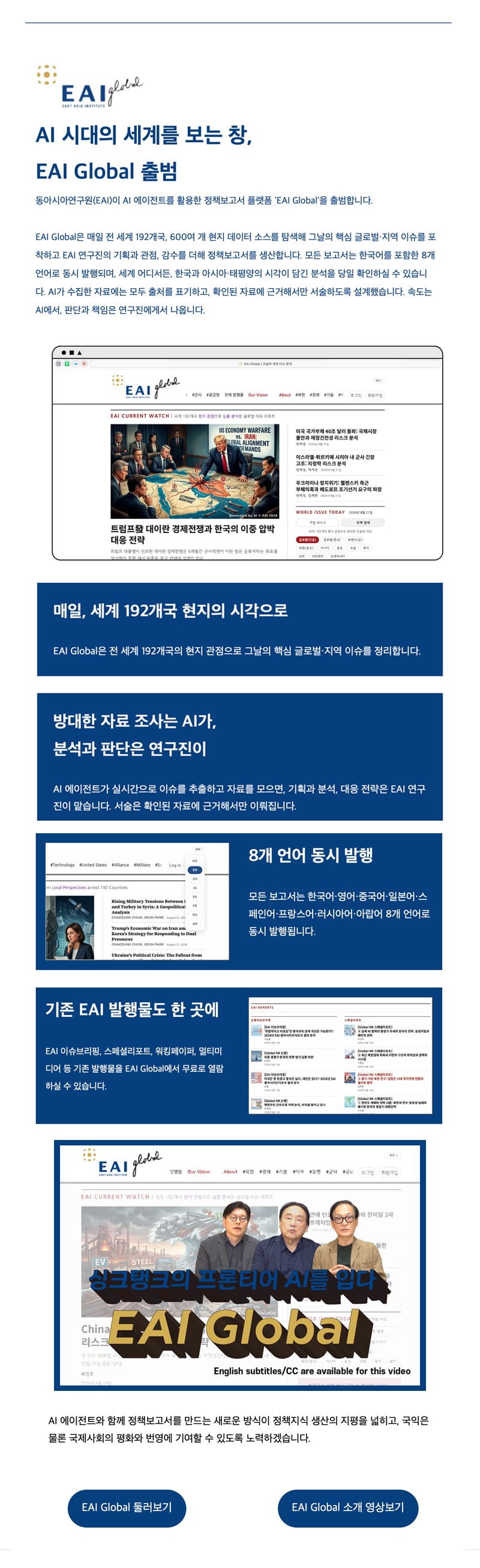
Kyu Sup Hahn 2020-11-10조회 : 10229
논평이슈브리핑
[Asia Democracy Issue Briefing] South Korean National Pride beyond "Patriotism Highs" and "Hell Chosun"

.a_wrap {font-size:16px; font-family:Nanum Gothic, Sans-serif, Arial; line-height:26px;} 편집자 주 The “Patriotism Highs” controversy and the “Hell Chosun” discourse have been pervasive in Korean society, reflecting Koreans’ perspective towards their society today. In this issue briefing, Dr. Hanwool Jeong, Senior Research Fellow at Hankook Research, analyzes the reasons behind the sharp rise in national identification and national pride among Koreans based on the results of the Korean Identity Survey conducted in 2020. Dr. Jeong said that the remarkable increase in national pride has resulted from the successes of the response to COVID-19 acclaimed as “K-quarantine” as well as the reappraisal on the Korea’s health/welfare sys-tem along with civic awareness. At the same time, Dr. Jeong points out that we should be vigilant of the so-called “patriotism highs (guk-ppong)”, raising the need to address the fundamental problems plagued in our society and also the importance of restoring pride and trust in our communities first.      The Success of K-Quarantine and the “Patriotism Highs” Controversy In the 2020 round of the Korean Identity Survey, a quinquennial survey launched in 2005 conducted jointly by the East Asia Institute (EAI) and the East Asia Collaboration Center (EACC) at Sungkyunkwan University, a remarkable increase was noted in the degree of national identification and national pride expressed by survey participants. In the first round of this survey conducted in 2005, 77% of respondents indicated that they felt a sense of community as a Korean national. This figure has climbed steadily over time to reach 90% in 2020. This result is in contrast to the percentage of those who said they felt an affinity with an ethnic Korean, which increased slightly and then declined to 64%.[1] Further, in place of the previous trends that had exhibited national pride and embarrassment concurrently, a sense of positive psychological attachment to national pride is strengthening. In 2005, 70% of survey respondents agreed with the statement “If I could be born again, I would want to be Korean,” while in 2020, that figure jumped to 80%. While 48% of respondents agreed with the statement “I feel a little embarrassed about Korea” in 2005, just 31% said the same in 2020, which is a huge drop.       The increasing sense of national pride and unity felt among Koreans is in part due to the international attention that the country’s success in containing COVID-19 has drawn. According to the results of Hankook Research’s biweekly regular survey “Public Opinion Within Public Opinion,” following the two weeks in March when South Korea’s cases dropped rapidly, 70-80% of the public has consistently rated the government response to the coronavirus highly. While this figure fell to 50% after cases increased again following August 15 2020, it climbed back up to 75% when the government lowered the social distancing level to 1 during the first week of October (see Figure 2). Koreans began to use the shortened term “K-quarantine” to refer to their government’s success in combating the coronavirus, as they heard about the widespread reporting in outlets like The Wall Street Journal and CNN on Korea’s declining cases, contact tracing app, and diagnostic kits.[2] In the Public Opinion Within Public Opinion survey conducted in August 2019, which was the pre-coronavirus period, 68% of respondents agreed with the statement “I am proud to be a Korean,” but by April 2020 that figure had jumped to 80%. In the same survey, the number of respondents who agreed with the statement “I am satisfied living in Korean society” went from 58% to an astonishing 76% during the same time frame (Figure 3). There is a growing concern over the so-called excessive “patriotism high” vis-a-vis the tangible feeling of national pride in Korean society right after K-quarantine has yielded success, which is considered the defining moment that has resulted in the strengthened national pride. There have particularly been an increasing number of discussions about the phenomenon of the “patriotism high” among those in their 20s and 30s.[3]       Of course we can also attribute this debate over “patriotism highs” and increasing national pride to the factors such as BTS reaching No. 1 on the Billboard Chart against the backdrop of the ongoing K-pop and K-drama craze and Bong Joon-ho’s film “Parasite” winning the Academy Award this year. Besides, the government-led implementation of K-quarantine in the face of the COVID-19 pandemic (especially the leadership of the health authorities) and the strengths of Korea’s welfare and healthcare sys-tems have been considered another contributing factors. According to a survey conducted jointly by KBS, Sisain, Seoul National University, and Hankook Research, an astounding 53% of survey respondents stated that their trust in the country had increased, and 27% said their trust in the Blue House[4] had increased, while 21% said their trust in the government as a whole had increased, following the outbreak of COVID-19. If we consider that in contrast, trust in religious institutions (-46%), the media (-45%), and the National Assembly (-33%) among many others experienced a drastic decrease, it is difficult to deny the influence of K-quarantine on the recent increase in national pride.[5]   Factors for Increasing National Pride: Rediscovery of “K-Healthcare/Welfare” + “K-Citizens” Looking at the existing debates, it is pointed out that the magnifications of the successes of the government’s K-quarantine combined with media and YouTube content enumerating the failures of foreign governments and exaggerating Korea’s superiority are inflaming the feelings of patriotism intoxication among Koreans, particularly among youths. In other words, there is a growing concern that this tendency has led to an overly positive assessment of Korea and a denigration of other cultures. However, looking at the results of the Korean Identity Survey 2020, the impact of COVID-19 has not been limited to increase in national pride and feelings of superiority about Korea compared to other countries. There has also been a major reappraisal of the formerly unrecognized strengths of Korea’s healthcare/welfare sys-tem, along with the citizens’ patient adherence to and implementation of the prevention guidelines. Looking at Figure 4, other categories related to Korea’s sharp rise in national pride increased dramatically compared to the 3rd survey conducted in 2015. There was a 35% (46%→81%) increase in the number of respondents who were proud of the level of Korea’s social security support and a 22% (52%→74%) increase in those who were proud of the maturity of Korea’s democracy. The 2020 survey included “healthcare/welfare sys-tem” for the first time in this question category, and a whopping 96% of respondents agreed that they were proud of Korea’s sys-tem.           In the 2020 survey, 89% of respondents felt pride in Korea’s “culture and arts”, represented mainly by Hallyu (K-pop and K-dramas), following “Korea’s national healthcare sys-tem”, contributing significantly to the overall increase in national pride. However, “culture and arts” only marks an increase of 12% (78%→89%) compared to the result five years ago. Compared to the 22% rise in this category between 2010 and 2015, the trend appears to be falling. There was no change in how Koreans felt about the country’s “economic achievements” compared to the 2015’s survey, while “military power” saw a 12% (45%→57%) increase, as did “Korea’s international standing” (49%→61%). Korea’s national healthcare sys-tem, democratic maturity, and the level of social security were previously something of a target for social ridicule. The rapid increase in national pride regarding these categories is, again, difficult to explain without factoring in the variable of the country’s response to COVID-19 outbreak. Looking at the March results of Hankook Research’s “Public Opinion Within Public Opinion” survey, when asked about the principal agents within society that have made the greatest effort to overcome COVID-19, respondents ranked “public health institutions” (96%) followed by “the Korea Disease Control and Prevention Agency (KDCA)” (94%) and “private medical institutions” (93%). More than 90% also selected “the people.” Respondents were also amicable towards the efforts made by the government as seen in the Ministry of Health and Welfare (86%) and the Blue House (69%).     The sensitivity of the “national pride” response is in fact closely mirrored among those who are middle-aged and older, rather than the younger generations. According to a comparative research survey titled “Generation Z and Generation X (those born in the 70s)” conducted by Hankook Ilbo and Hankook Research in January 2020, the level of national pride felt among Korea’s youth does not rise to that of the level felt by the older generations. While 71% of Generation X respondents agreed with the statement “I feel proud about the spread of Hallyu such as BTS,” just 53% of Generation Z respondents felt the same.[6] In comparison to the August 2019 “Public Opinion Within Public Opinion” survey, the greatest increase of agreement with the statement “I am proud to be a Korean” was 16% (66%→82%) among those in their 30s and those in their 60s (63%→79%). In contrast, agreement among respondents in their 50s increased by 13% (69%→82%), while 9% more of those in their 40s agreed (75%→84%) and just 7% more of those in their 20s agreed (67%→74%) with the statement. This survey results show that we must exercise caution and not assume that the opinions expressed by younger people online are shared by their entire generation.                   Despite the Increase in National Pride, the Perception of “Hell Chosun[7]” Persists One consideration of the marked increase in national pride is the potential for it to prohibit objective self-assessment and transform it into exclusive supremacy. However, in Korean society, the strengthening of national identification has been accompanied by liberal citizenship, rather than a suppression of liberal citizenship, and this positive function of national pride should not be overlooked. Pride is a factor that connects community members, and as such plays the role of the psychological glue that maintains community standards and shared interests. Further, increased pride in one’s community increases both individual trust in that community and the recognition of one’s social responsibility as a member of the community At the same time, we must not let our guard down when it comes to the harmful effect of the reverse bias “Hell Chosun” discourse. Weak trust capital is the biggest roadblock for Korea on the path to social maturity and growth. Establishing fair rule of law, social networks, a social safety net, and so on have been considered the building blocks to form trust capital [8] Of particular note is that according to the results of the recent survey, psychological attachment to a community can also have a significant effect on the development of social trust between members of that community. At the same time, we must also pay attention to the important role that cynicism and frustration toward a national community play in chipping away at trust capital. In fact, the survey conducted in May of this year by KBS, Sisain, Seoul National University, and Hankook Research confirmed that there is a clear correlation between social trust and national pride. Among those respondents who had strong national pride, 76% agreed with the statement “I trust Korean society,” while just 42% of respondents who indicated weak national pride did so. Further, pride in one’s community can enhance social responsibility and a sense of solidarity with disadvantaged community members. In the same survey, the group with strong national pride also indicated a high level of agreement with the statement “I will pay higher taxes to help the poor,” and a low level of agreement with the statement “I will not pay taxes.”(Figure 8 & 9). This plainly shows that a positive mindset gives rise to positive actions.       Korean Society’s Lack of Trust in Korean Law and Institutions, and the Absence of a Community Mentality It is true that the government’s prevention response and leadership during COVID-19 have allowed us to feel our institutional strengths. However, the underlying recognition within Korean society of the weaknesses of the existing laws and institutions has not changed. As you can see in Figure 10, during the response to COVID-19, trust in the government, social trust, and appreciation for the social welfare sys-tem sharply increased. While these changes have inspired optimism, distrust in the rule of law and the fundamental of society has remained steady during this time, and there seems no hope for opportunities for social mobility. Trust in the statement “The law is applied fairly in our society” is stuck at 20%, and just one or two people in ten agree with the statement “there are opportunities for social mobility.” These are the basic principles upon which society rests that offer a basis for hope. Without change to these fundamentals of society, the recent trust in the government and society that has arisen from pride in Korea’s coronavirus response is already showing signs of dropping in the changing environment. Trust in the social welfare sys-tem remains steady, but the trend has stopped its upward trajectory (Figure 10). The debate in political circles about universal vs. selective welfare is hot, but beyond disease prevention, the social safety net is extremely weak. The percentage of citizens who can receive financial help from an institution when they are in need or help with household tasks when self-quarantining is just 30%. The percentage of citizens who said they can get help from a personal rather than institutional source does not reach 50%. According to a recent survey, the implementation of the flexible working sys-tem to deal with the situation has actually hit those who are already struggling with care burdens with a double whammy. Parents have emphatically had a negative response to flextime.[9] The pride of the people themselves, who are of course the main players in terms of pride in Korean democracy, also rests on this vulnerable foundation. The Korean public has been phenomenal in terms of voluntarily restraining their rights and freedoms by social distancing and enduring the mask crisis under the goal of disease control. However, civic action has also failed to advance to the stage of taking the additional step needed to prevent problems before they arise. The percentage of people who have given either tangible or intangible support to those experiencing difficulties balancing care obligations and financial hardship is less than 20%, and just 15% of respondents indicated they had ever made a charitable donation or participated in volunteer work (Figure 11). In other words, there is no social safety net in place to help those disadvantaged members of society who are either outside the scope of the government’s assistance or who fall through the cracks of the existing sys-tem. The government needs to expand the social welfare sys-tem, but these results also show that there is a need for a more advanced citizenship in terms of solidarity and social responsibility.[10]     The response to COVID-19 has demonstrated that we should not underestimate the capacity and potential of Korean society. Korea has exulted in its success in achieving this short-term goal, not because of the attention from foreign countries and media, but because for the first time, Koreans have escaped the negative paradigms (Hell Chosun, social inequality, N-po generation[11], 3D society (distrust, discontent, disquietude)), following democratization and industrialization. For the first time, Koreans have experienced the power of a positive framework. Ultimately, if we want to build a society that can solve the remaining tasks ahead of us, we must slough off the pessimism of Hell Chosun and begin building confidence and pride in the community that we live in.■   [1] Kang Won Taek discussed the dual phenomenon of increasing national identity and decreasing ethnic identity and the reasons behind it using the same survey. See “Korea’s National and Ethnic Identity: Fifteen Years of Change” (EAI Working Paper) 2020. [2] “The World Focuses on K-prevention...Government, Press Briefings Held” Yonhap News (2020.05.07) [3] The Korean word “Guk-ppong” translated here as “patriotism high” (or “patriotism intoxication”) is a compound word composed of “nation” and “philopon,” the name for methamphetamine coined by the Japanese and imported into Korea. It is used to describe a state of being high or intoxicated with a feeling of excessive national pride. “Head of National Diplomatic Academy Warns Against Patriotism High over K-prevention...Don’t Get Carried Away with Expectations, Arrogance” (2020.05.28); Weekly Chosun, “COVID-19 is Raising Youths to Be Patriotism High Addicts” (2020.06.18); Kyunghyang Shinmun, “The Patriotism High of K-prevention” (2020.06.29); Hankook Ilbo, “Why 20-30 Year Olds Are Still Clamoring to Leave Korea Despite Being High on Patriotism” (2020.09.16) [4] Blue House refers to the Korean presidential residence [5] Cheon Kwan Yool. “The ‘Korean World’ Emerging from COVID-19 - An Unexpected Response” Sisain. Vol. 663 (2020.06.02) [6] Hankook Ilbo. “Why Should I Live Like You?...Generation Z’s Lack of Support for Unification” (2020.01.03) [7] Editor’s Note: Hell Chosun is a satirical South Korean term that became popular around 2015. The term is used to criticize the socioeconomic situation in South Korea. It is particularly popular among younger Koreans, due to their feelings about unemployment and working conditions in modern society https://en.wikipedia.org/wiki/Hell_Joseon [8] Lee Jae Yeol. If I Were Born Again I’d Still Be Korean: Searching for the Lost Dignity of a Society that Went From the Miracle on the Han to Hell Chosun. (21st Century Books, 2019). [9] For details, see Choi Sun-ah. “Flextime Brought On By Coronavirus, Present and Future” Hankook Research, Public Opinion Within Public Opinion Vol. 101-01 (2020.10.28). [10] Kim Hye-jin. “In the Midst of Overcoming COVID-19, Social Trust and Mutual Trust Thicken, but Half is Self-Sustaining” Hankook Research, Public Opinion Within Public Opinion Vol. 72 (2020.04.08). [11] Translator’s note: The “N-po” generation is used to mean “numerous giving-up generation” or “the generation that gave up N amount of things.” The term is a derivation of and expansion on the Sampo generation which gave up three things: dating, marriage, and childbirth. The Opo generation gave up on five things: dating, marriage, childbirth, home, and career. “N-po” indicates a generation that has had to abandon all of these things plus hobbies, education, human relationships, etc., an “endless number of things,” due to soaring housing and tuition prices and increasingly scarce employment opportunities.     ■ Hanwool Jeong is a Senior Research Fellow and Research Designer at Hankook Research in South Korea. He received his Ph.D. in political science from Korea University, and was the executive director at the Center for Public Opinion Research at the East Asia Institute until 2015. His recent publications include “The Corruption Scandal and Vote Switching in South Korea’s 19th Presidential Election” (2019), “Generation as Group Identity and its Political Effect” (2018), “Rising Swing Conservatives in South Korea: The Causes and Results” (2017) and “National Identity Change in South Korea: The Rise of Two Nations and Two State Identities” (2017).    ■ 담당 및 편집: 이은지 EAI 연구원               문의: 02 2277 1683 (ext. 207) / [email protected]     [EAI이슈브리핑]은 국내외 주요 사안에 대해 다양한 분야의 전문가들이 심층적인 분석을 통해 의견을 개진하고 정책적 제언을 발표할 수 있는 담론의 장을 마련하고자 기획된 시리즈입니다. 인용할 때에는 반드시 출처를 밝혀주시기 바랍니다. EAI는 어떠한 정파적 이해와도 무관한 독립 연구기관입니다. EAI가 발행하는 보고서와 저널 및 단행본에 실린 주장과 의견은 EAI와는 무관하며 오로지 저자 개인의 견해임을 밝힙니다.     

Hanwool Jeong 2020-11-10조회 : 10613